




The Drone and Missile Onslaught on Kyiv: A Tech Perspective
The recent large-scale Russian drone and missile strike on Kyiv, resulting in casualties and widespread damage, once again brings into sharp focus the relentless evolution of modern warfare. While the human cost is tragic, from a technological standpoint, these attacks serve as a stark reminder of the advanced capabilities now deployed in conflicts. This incident isn't just about destruction; it's a real-world demonstration of sophisticated offensive and defensive technologies battling for supremacy in the skies. For a nation like India, constantly modernizing its defense capabilities, these developments offer crucial insights into the future of military technology.
The Evolving Arsenal: Drones and Missiles in Modern Conflict
The assault on Kyiv typically involves a combination of unmanned aerial vehicles (UAVs) and various types of missiles. Iranian-designed Shahed-136 'kamikaze' drones, often rebranded as Geran-2, are frequently used. These are relatively inexpensive, slow-flying, propeller-driven drones designed to overwhelm air defenses through sheer numbers. They carry an explosive payload and are programmed to hit specific targets, making them 'loitering munitions'. Their low cost allows for mass deployment, posing a significant challenge even to advanced air defense systems.
Alongside drones, Russia deploys a range of cruise and ballistic missiles. Cruise missiles, like the Kalibr or Kh-101, fly at low altitudes, often following terrain to evade radar, and can strike targets with high precision. Ballistic missiles, such as the Iskander, follow a high-arc trajectory, reaching supersonic speeds on descent, making them extremely difficult to intercept. The combined use of these different types of aerial threats – slow, numerous drones and fast, powerful missiles – creates a complex air picture for defenders, designed to stretch and exhaust air defense resources.
Shielding the Skies: Air Defense Innovations at Work
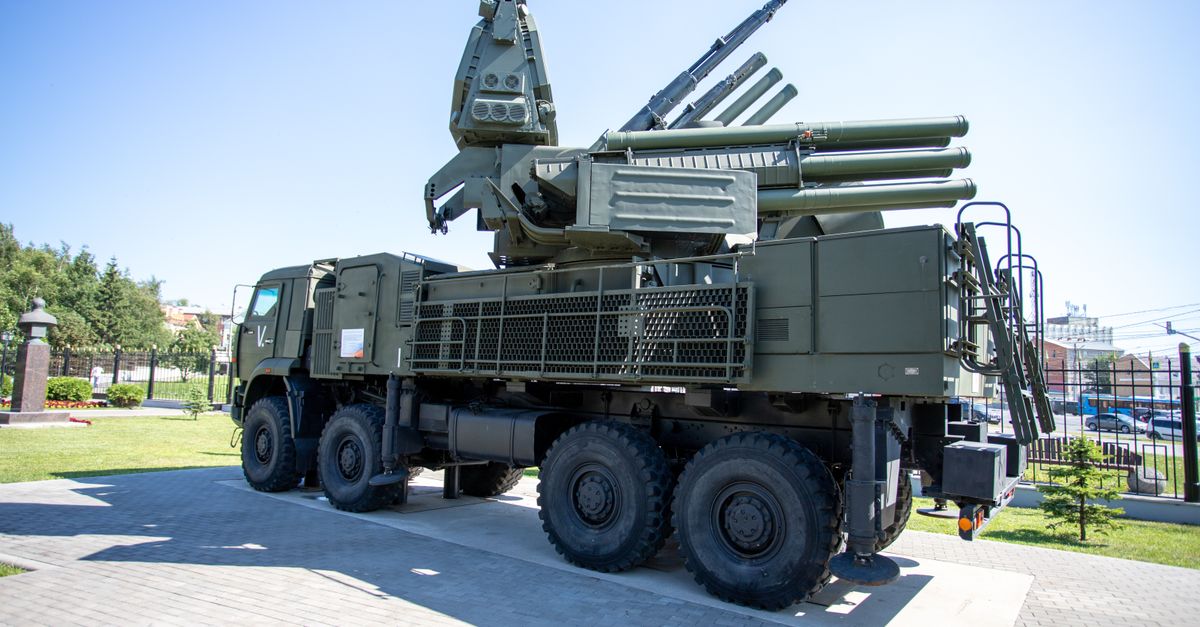
Countering such a multi-layered threat requires an equally sophisticated defense. Kyiv's defenses are a mix of modern Western systems and upgraded Soviet-era technology. High-end systems like the US-made Patriot missile defense system are crucial for intercepting ballistic and advanced cruise missiles. These systems use powerful radars to detect incoming threats and launch interceptor missiles that destroy targets kinetically, meaning they hit and destroy the incoming missile directly.
Other Western contributions include NASAMS (National Advanced Surface-to-Air Missile System) and IRIS-T SLM, which are effective against cruise missiles, aircraft, and some drones. Germany's Gepard self-propelled anti-aircraft guns, with their rapid-firing cannons, are particularly useful against slower, lower-flying targets like Shahed drones. The strategy often involves a 'layered defense' – using different systems to cover various altitudes and speeds, from short-range point defense to long-range area defense. Electronic warfare (EW) systems also play a role, attempting to jam drone navigation signals or disrupt missile guidance.
AI and Automation: The Silent Revolution in Warfare
Beyond the visible hardware, artificial intelligence (AI) and automation are increasingly becoming pivotal. AI algorithms can analyze vast amounts of data from radar, satellites, and other sensors to identify threats faster, predict trajectories, and recommend optimal interception strategies. Autonomous features in drones allow them to navigate complex environments, identify targets, and even operate in swarms with minimal human intervention. While fully autonomous lethal weapons systems raise ethical concerns, the trend towards greater automation in target detection, tracking, and engagement is undeniable.
This technological arms race extends to counter-drone measures as well. AI-powered vision systems can detect small drones amidst clutter, while machine learning helps differentiate between friendly and hostile aerial objects. The ability to rapidly process information and make decisions in real-time is a force multiplier, impacting both offensive and defensive operations.
Global Tech Race: Lessons for India's Defense
For India, a nation facing complex geopolitical challenges and committed to modernizing its armed forces, the developments in Ukraine are a critical case study. The efficacy of drone warfare, the necessity of robust, multi-layered air defense, and the growing role of AI are all areas of intense focus. India is actively investing in indigenous drone technology, from surveillance UAVs like TAPAS-BH to potential combat drones like Ghatak. The 'Make in India' initiative in defense is pushing for self-reliance in developing advanced sensors, communication systems, and weapon platforms.
India's ongoing efforts to strengthen its air defense network, including the acquisition of S-400 systems and the development of its own Ballistic Missile Defense (BMD) shield, are directly informed by global conflicts. The need for effective anti-drone systems, capable of neutralizing swarms of low-cost UAVs, is also a high priority. Indian defense researchers are exploring AI applications in target recognition, autonomous navigation for drones, and enhancing the situational awareness of commanders.
What to Watch Next: The Future of Warfare
The conflict in Ukraine continues to be a proving ground for emerging military technologies. Going forward, observers should watch for advancements in counter-hypersonic weapon technology, as nations race to develop defenses against these incredibly fast and maneuverable missiles. The integration of quantum computing into defense systems, while still nascent, could revolutionize encryption and sensor capabilities. Furthermore, the ethical and legal frameworks surrounding autonomous weapons systems will continue to evolve, shaping how these powerful technologies are deployed.
The Kyiv strikes underscore a fundamental truth: technology is continuously reshaping the battlefield. For India, staying at the forefront of defense innovation, fostering indigenous capabilities, and learning from global conflicts will be paramount to ensuring national security in an increasingly complex world.